Gondar: History, Former Names & Timeline
Capital of the Ethiopian empire from the seventeenth to the nineteenth century; the castles of the Fasil Ghebbi mix Aksumite, Arab and Portuguese styles.
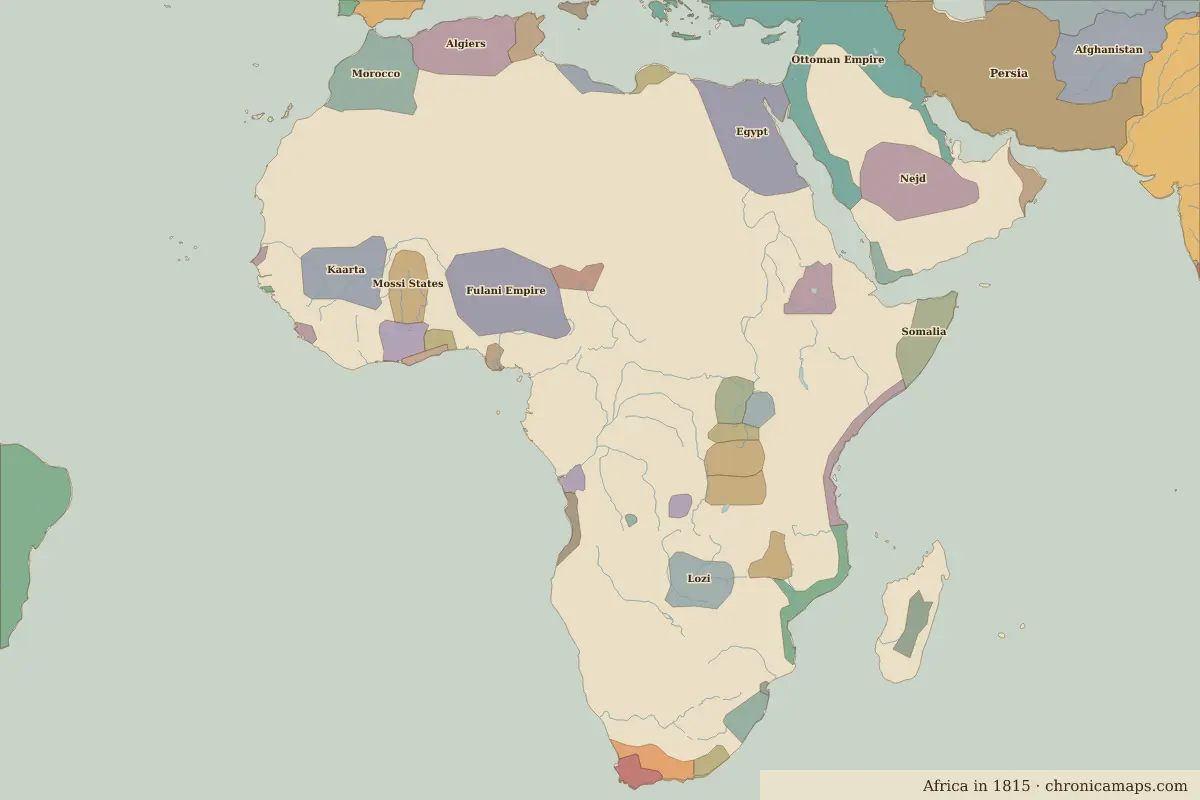 Gondar
Explore Gondar in the interactive map
Former names of Gondar
| From | Name | Note |
|---|---|---|
| 1636 | Gondar |
Timeline of Gondar
| Year | Event |
|---|---|
| 1636 | Emperor Fasilides makes Gondar his capital |
| 1769 | The Era of the Princes begins and imperial power declines |
| 1855 | Tewodros II moves the capital away |
| 1888 | Sudanese Mahdist forces sack Gondar |
| 1941 | Italian forces surrender at Gondar |
Who ruled Gondar
Derived from the border maps; each row runs until the next recorded border change.
| Period | State |
|---|---|
| 500 BC–499 | West African cereal farmers |
| 500–599 | Axum |
| 600–699 | West African cereal farmers |
| 700–999 | Axum |
| 1000–1199 | Unclaimed / no data |
| 1200–1299 | Ifat |
| 1300–1913 | Ethiopia |
| 1914–1919 | Abyssinia |
| 1920–1937 | Ethiopia |
| 1938–1944 | Ethiopia (Italy) |
| 1945–today | Ethiopia |
Famous people of Gondar
| Lived | Person | |
|---|---|---|
| 1844 – 1913 | Menelik II | Emperor of Ethiopia |
Nearby cities
- Aksum · about 216 km
- Addis Ababa · about 422 km
Further reading
Questions about Gondar
Which states have ruled Gondar?
On the historical border maps from 500 BC to today, Gondar lies within 6 different states: West African cereal farmers, Axum, Ifat, Ethiopia, Abyssinia, Ethiopia (Italy).
What are the key dates in the history of Gondar?
1636: Emperor Fasilides makes Gondar his capital. 1769: The Era of the Princes begins and imperial power declines. 1855: Tewodros II moves the capital away. 1888: Sudanese Mahdist forces sack Gondar. 1941: Italian forces surrender at Gondar.
Which famous people are connected with Gondar?
Menelik II (emperor of ethiopia, 1844 – 1913).
Last updated 9 November 2026. Sources: border data from historical-basemaps, land and rivers from Natural Earth; texts written for Chronica Maps from standard reference works. How we make the maps.