Kairouan: History, Former Names & Timeline
The first Arab city of North Africa and the centre from which the Maghreb became Muslim.
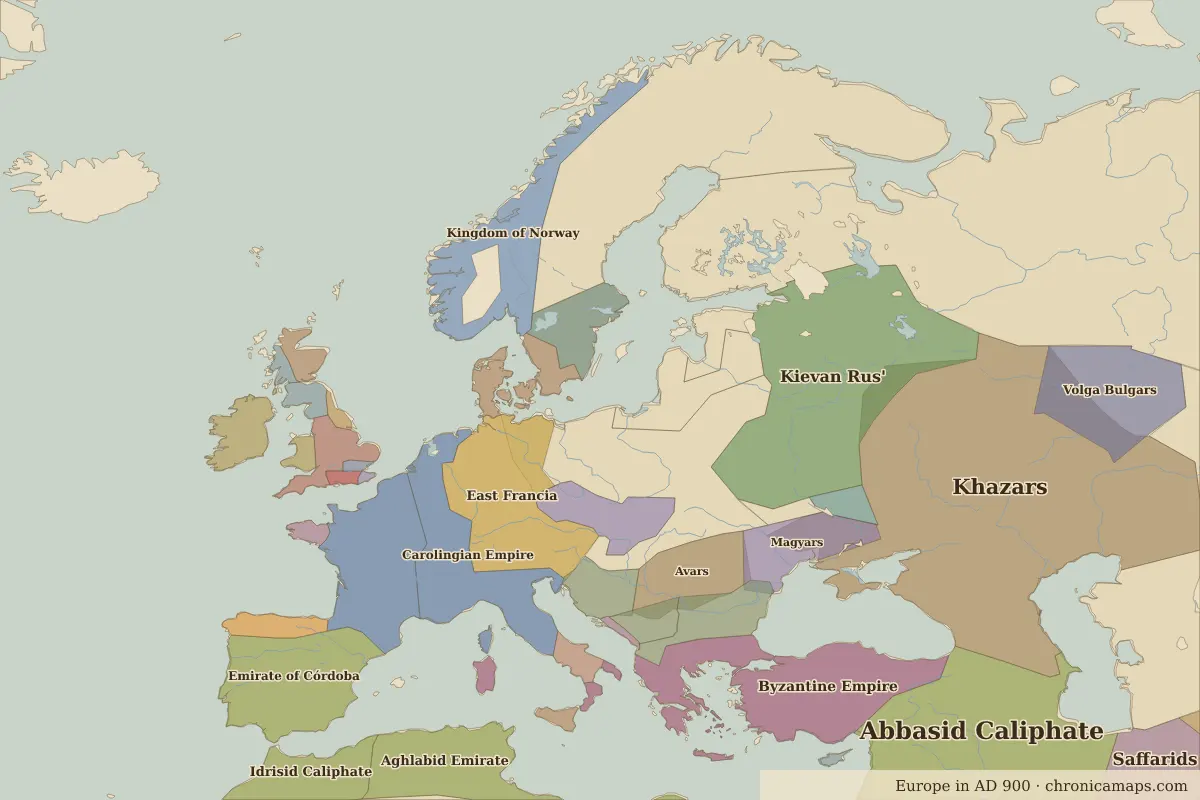 Kairouan
Explore Kairouan in the interactive map
Former names of Kairouan
| From | Name | Note |
|---|---|---|
| AD 670 | Kairouan |
Timeline of Kairouan
| Year | Event |
|---|---|
| AD 670 | Uqba ibn Nafi founds the city and its Great Mosque |
| AD 800 | The Aghlabids rule from Kairouan |
| AD 909 | The Fatimids overthrow the Aghlabids |
| 1057 | The Banu Hilal tribes sack Kairouan |
| 1881 | French troops occupy the city |
Who ruled Kairouan
Derived from the border maps; each row runs until the next recorded border change.
| Period | State |
|---|---|
| 500 BC–201 BC | Carthaginian Empire |
| 200 BC–101 BC | Carthage |
| 100 BC–2 BC | Roman Republic |
| 1 BC–299 | Roman Empire |
| 300–399 | Rome (Maximian) |
| 400–499 | Western Roman Empire |
| 500–599 | Vandals |
| 600–699 | Eastern Roman Empire |
| 700–799 | Umayyad Caliphate |
| 800–999 | Aghlabid Emirate |
| 1000–1299 | Fatimid Caliphate |
| 1300–1599 | Hafsid Caliphate |
| 1600–1782 | Ottoman Empire |
| 1783–1879 | Tunis |
| 1880–1899 | Ottoman Empire |
| 1900–today | Tunisia |
Battles and sites near Kairouan
- Battle of Zama · 202 BC
Nearby cities
Further reading
Questions about Kairouan
Which states have ruled Kairouan?
On the historical border maps from 500 BC to today, Kairouan lies within 15 different states: Carthaginian Empire, Carthage, Roman Republic, Roman Empire, Rome (Maximian), Western Roman Empire, Vandals, Eastern Roman Empire, Umayyad Caliphate, Aghlabid Emirate and others.
What are the key dates in the history of Kairouan?
AD 670: Uqba ibn Nafi founds the city and its Great Mosque. AD 800: The Aghlabids rule from Kairouan. AD 909: The Fatimids overthrow the Aghlabids. 1057: The Banu Hilal tribes sack Kairouan. 1881: French troops occupy the city.
Last updated 9 November 2026. Sources: border data from historical-basemaps, land and rivers from Natural Earth; texts written for Chronica Maps from standard reference works. How we make the maps.