Cartagena: History, Former Names & Timeline
Fortified Caribbean port where the Spanish treasure fleets gathered; its walls and forts survive.
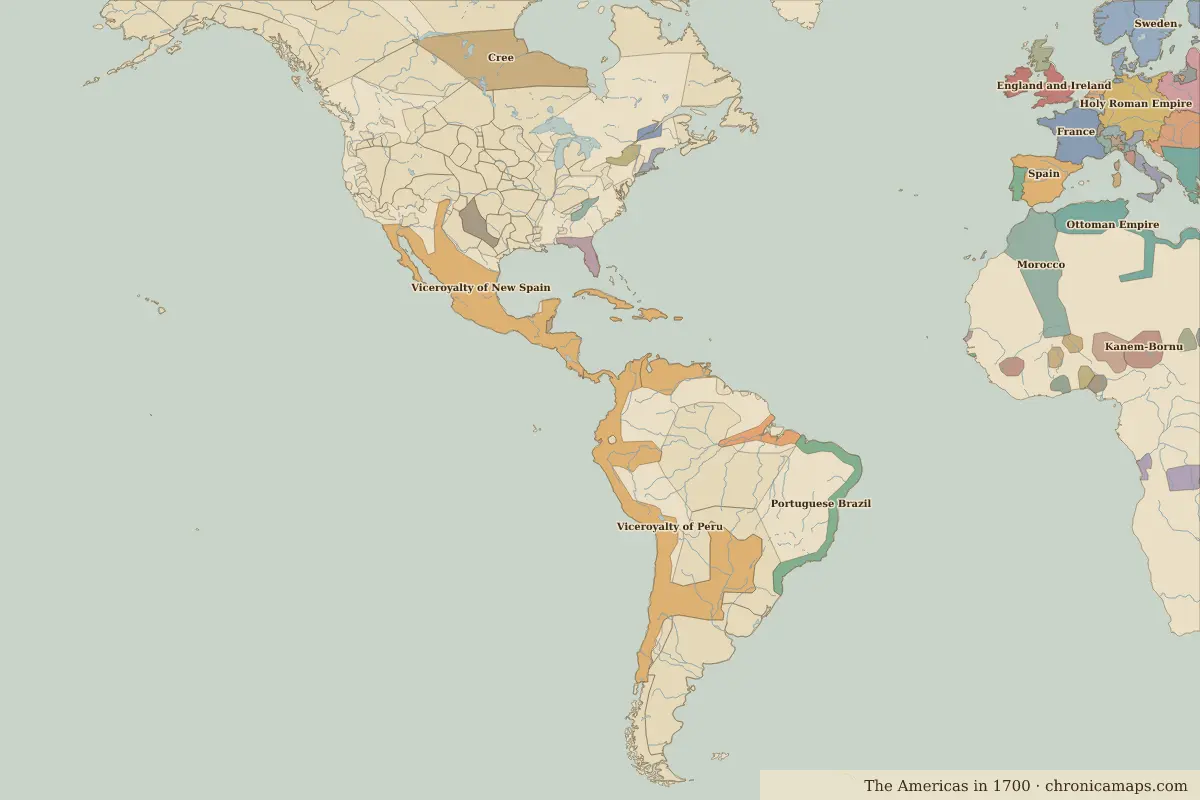 Cartagena
Explore Cartagena in the interactive map
Former names of Cartagena
| From | Name | Note |
|---|---|---|
| 1533 | Cartagena de Indias |
Timeline of Cartagena
| Year | Event |
|---|---|
| 1533 | Pedro de Heredia founds the city |
| 1586 | Drake takes the city and holds it to ransom |
| 1741 | A British fleet under Vernon fails to take the city |
| 1811 | The city declares independence from Spain |
| 1984 | The port, fortresses and monuments become a World Heritage Site |
Who ruled Cartagena
Derived from the border maps; each row runs until the next recorded border change.
| Period | State |
|---|---|
| 500 BC–2 BC | Manioc farmers |
| 1 BC–1491 | Unclaimed / no data |
| 1492–1499 | Mokaná |
| 1500–1599 | Unclaimed / no data |
| 1600–1649 | Viceroyalty of New Spain |
| 1650–1782 | Viceroyalty of Peru |
| 1783–1879 | Viceroyalty of New Granada |
| 1880–today | Colombia |
Further reading
Questions about Cartagena
What was Cartagena called in the past?
Cartagena has been known as Cartagena de Indias (from 1533). Its present name dates from 1533.
Which states have ruled Cartagena?
On the historical border maps from 500 BC to today, Cartagena lies within 6 different states: Manioc farmers, Mokaná, Viceroyalty of New Spain, Viceroyalty of Peru, Viceroyalty of New Granada, Colombia.
What are the key dates in the history of Cartagena?
1533: Pedro de Heredia founds the city. 1586: Drake takes the city and holds it to ransom. 1741: A British fleet under Vernon fails to take the city. 1811: The city declares independence from Spain. 1984: The port, fortresses and monuments become a World Heritage Site.
Last updated 9 November 2026. Sources: border data from historical-basemaps, land and rivers from Natural Earth; texts written for Chronica Maps from standard reference works. How we make the maps.